Features
AI Old Money Photo Generator
By Ofrai Editorial (Use Case Research)
An AI old money photo generator produces images built on understated wealth: heavy fabrics, muted colour, old architecture, and a subject who looks like they have never had to explain themselves. Open Image Studio on Ofrai, pick a live model, and describe the wardrobe, the light, and the setting. The aesthetic depends far more on restraint than on price tags, so the prompts here focus on fabric weight, absence of logos, and the low warm light of estates and country houses.
New accounts include 1 free GPT Image 2.5 generation. Other models and video use credits.
Example prompts
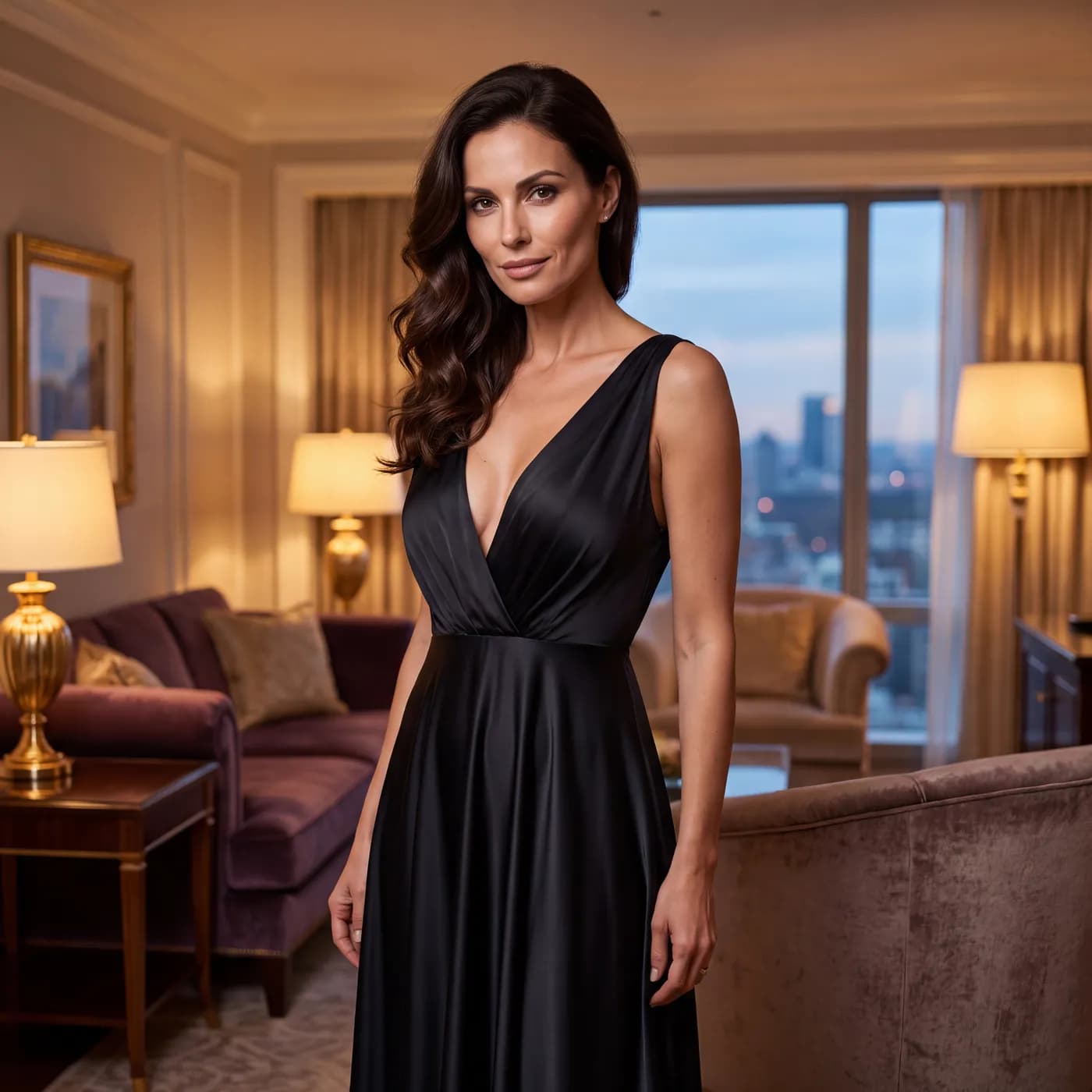
Black gown portrait by a city window at dusk, warm lamps and skyline
What old money actually signals visually
The aesthetic is defined by what is absent. No visible branding, no bright colour, no trend that will date in a year, no expression of effort. What is present: weight. Fabrics that fall rather than cling, frames with patina, surfaces that show age gracefully. Write it as restraint rather than as luxury vocabulary — 'understated, no visible logos, muted palette, nothing shiny' does more work than 'luxury lifestyle'. If your render looks like an advertisement, you have added one specific trend too many, usually a watch, a handbag, or a slogan.
Estate light and country-house settings
Lighting does more work here than wardrobe. Use 'late afternoon light through tall sash windows', 'soft overcast light at a stone house', 'warm low sun raking across a lawn'. Interiors read best with named architecture: 'panelled library with worn leather chairs', 'stone hallway with a large mirror', 'country kitchen with a wooden table and linen curtains'. Specify that the background is 'quietly lived-in, not staged' — clutter is what separates a real house from a showroom, but keep it to two or three objects.
Status props and how to use them sparingly
Props carry this style, and they are easy to overdo. One per frame is the rule. Good choices: a vintage wristwatch, a leather-bound book, a glass of claret on a side table, a classic car parked in the background, a sett dog on a lawn, an unmade linen bed. Add material and condition so it does not look new: 'well-worn leather', 'gold wedding band, simple band, no stone'.
Never stack a watch, a car, a dog, and a boat in one prompt; the frame stops reading as restrained and starts reading as a wish list.
Skin, hair, and age without caricature
This aesthetic skews toward a specific age range, and pushing it too hard produces uncanny results. Describe a person rather than a type: 'a woman in her late forties, silver hair cut short, faint sun lines, an unhurried expression'. Hair detail should be low — 'hair loosely brushed back' rather than a full description of strands. Skin should be described by light response, not by finish: 'skin catching the window light, natural texture, no retouching'. Avoid 'flawless', which fights the entire point of the look.
Prompt recipes for three old money scenes
Reading in the library: 'Woman in her late forties in a navy cashmere crewneck, seated in a panelled library with worn leather chairs, late afternoon light through a tall sash window, glass of claret on the side table, quiet and unhurried, 3:2'. Country weekend: 'Man in a soft brown tweed blazer over a cream linen shirt, standing on a lawn in front of a stone house, soft overcast light, a sett dog beside him, 4:5'.
The car: 'Vintage estate car parked on a gravel drive at dusk, warm low sun, wet grass, no visible badges, cinematic and quiet, 16:9'. Keep the lighting sentence identical across your set.
Model choice for a luxury-photography finish
flux-2 is where you explore: it is fast and cheap, and this look needs many takes before one settles. gpt-image-2 is the safe pick for portraits, because it holds facial structure and skin plausibility while you adjust fabric detail. nano-banana-pro renders fabric weight and architectural texture better than the others, so use it for the final frame of a hero image. seedream-5 pushes toward illustration, which is useful for editorial layouts but wrong for photographic luxury work.
When old money reads as costume
The failure mode is period dress. Symptoms: everyone is dressed identically, the frame is full of props, the lighting is theatrical rather than natural, and every surface is spotless. Fixes are structural. Vary garments between frames instead of repeating one. Drop to zero or one prop. Use flat, available daylight rather than 'golden'. And introduce one imperfection — a creased shirt, a chipped cup, grass underfoot — because perfect surfaces are what make an image read as a set rather than a house someone lives in.
Five prompts at different points on the restrained scale
The aesthetic is a scale, not a switch, so write where you sit on it. Interior, quiet end: "a panelled library at four in the afternoon, low sun through tall sash windows falling across worn leather, one person seated reading, deep quiet, muted green and brown, 3:2." Country weekend: "a man in a soft brown tweed jacket standing on the lawn of a stone house, overcast daylight, hedgerow behind, unhurried posture, 3:2."
Travel, understated end: "a woman in her fifties in a navy cashmere coat beside a stone wall in drizzle, flat grey light, nothing in the background but wet grass, 2:3." Sport, warmer end: "a couple in cream linen after a match, holding rackets, bright but non-directional sunlight, clipped hedges behind, 4:5." Interiors, warmest end: "a hotel bedroom with panelled walls and a marble fireplace, late light, one armchair occupied, cream and walnut palette, 2:3."
Each of these works because it describes light and fabric, not money, and because the props are named once rather than accumulated.
Camera, lens, and light settings that keep it restrained
Three settings keep this style from tipping into costume drama. Lens: 50 to 85mm. A wide lens introduces an urgency that belongs to property photography, not to this aesthetic. Light direction: natural and available — "late afternoon light through tall sash windows" or "soft overcast light at a stone house". What kills it is "golden", because that word pulls a sunset drama with strong rim light and long dramatic shadows. Camera height: eye level, and keep the subject still; stillness is doing more work here than expression.
Colour: desaturate slightly in your grade and let one material carry the warmth, not the whole frame. Anything that is uniformly warm across skin, wall, and grass reads as a filter rather than as light.
Why this style reads as a period drama
The costume-drama failure has four causes and each has a specific fix. Uniform wardrobe: everyone dressed identically across a set. Fix it by giving each frame a different wardrobe while keeping the palette range the same. Prop saturation: a frame with a watch, a book, a car, a dog, and a decanter has stopped being restrained. Fix it by naming zero or one prop per frame and deleting the rest from the prompt. Dramatic light: strong rim light and long theatrical shadows.
Fix it by replacing "golden hour" with plain available daylight. Immaculate surfaces: every surface perfect reads as a film set rather than as a lived-in house. Fix it deliberately — "unmade bed", "a faint water mark on the side table", "slightly creased linen". The style lives on imperfection you cannot quite explain.
What a six-frame scene set costs in credits
This style needs many attempts before one settles, which is exactly why the exploration pass is wide. Scout: twelve flux-2 frames across three settings and two wardrobes, because the first requirement is that nothing in the frame is shouting, and that is a cheap thing to test. Lock: two gpt-image-2 frames, where skin and fabric weight are decided and where faces stop drifting. Produce: six nano-banana-pro frames on the survivors, mixing two or three settings so the set has variety.
Roughly twenty renders for six finished frames. On Ofrai they all come from one credit balance. The efficient habit is to change one variable per attempt rather than re-rolling the whole prompt — a wardrobe swap that fails tells you something a full re-roll never will.
How this differs from a luxury advertising workflow
Luxury advertising optimises for impact: high contrast, a hero object, deliberate emptiness, and a price implication. It wants to be looked at. This aesthetic wants to be glanced at and believed, which is why the light here is ordinary, the surfaces are worn, and no frame contains a single object expensive enough to photograph as merchandise. The practical consequence is that luxury work is usually one hero image while this is a recurring set, and that luxury prompts stack quality words while this one works by subtraction.
Use a luxury workflow when the image's job is to signal value to a buyer. Use this page when the job is to suggest a background that the subject already belongs to.
FAQ
- How do I make a generated image look old money rather than luxury advertising?
- Define the look by absence: no visible logos, muted palette, nothing shiny, no named trends. Then describe fabric weight rather than luxury vocabulary — 'navy cashmere crewneck', 'well-worn leather', 'softly creased linen'. Add lived-in imperfection such as a creased shirt or a chipped cup. Perfect surfaces and stacked props are what push the result toward an advert.
- What colours work best for the old money aesthetic?
- Navy, oatmeal, chocolate brown, forest green, cream, and burgundy all hold the understated line. Avoid pure black with pure white, which reads as contemporary formalwear, and avoid grey, which reads as corporate. Denim works only when described specifically, for example 'raw selvedge, unwashed, lightly creased at the hip'.
- How many status props should one frame contain?
- One per frame. A vintage watch, a leather book, a glass of claret, a classic car in the background, or a dog on the lawn each work on their own. Stacking several turns the frame into a wish list and destroys the restraint that makes the aesthetic read as understated wealth rather than a sales pitch.
- Which Ofrai model gives the most realistic luxury portrait finish?
- gpt-image-2 for faces, because it holds facial structure and skin plausibility while fabric detail is adjusted. nano-banana-pro for the final hero frame, since it renders fabric weight and architectural texture more convincingly. Use flux-2 to explore first, because this aesthetic usually takes many attempts before one settles.
- Can I generate the same character across several old money scenes?
- Yes. Lock the subject description, the lighting sentence, and the setting family, then change only wardrobe or location. gpt-image-2 holds identity across a batch better than the other listed engines, so it is the safer choice when the same person must appear in five or six frames. Generate the frame you like first and reuse its description as the base for every variation.
- Is this a separate Ofrai app for old money photography?
- No. This page deep-links into Ofrai Image Studio with your existing account, where you select a live model, write the wardrobe and lighting prompt, and generate using the same credits as text and video. Outputs are kept in your library so you can rerun one prompt across a whole series without re-entering anything.
Related generators
- AI Black And White Photo Generator
- AI Instant Film Photo Generator
- AI Liminal Space Image Generator
- AI Luxury Photo Generator
- AI Minimalist Photo Generator
- AI Caricature Generator
- AI Chibi Character Generator
- AI Classical Portrait Generator
- AI Cozy Anime Art Generator
- AI Cozy Winter Wallpaper Generator
- AI Crayon Drawing Generator
- AI Oil Painting Generator