Features
AI Classical Portrait Generator
By Ofrai Editorial (Use Case Research)
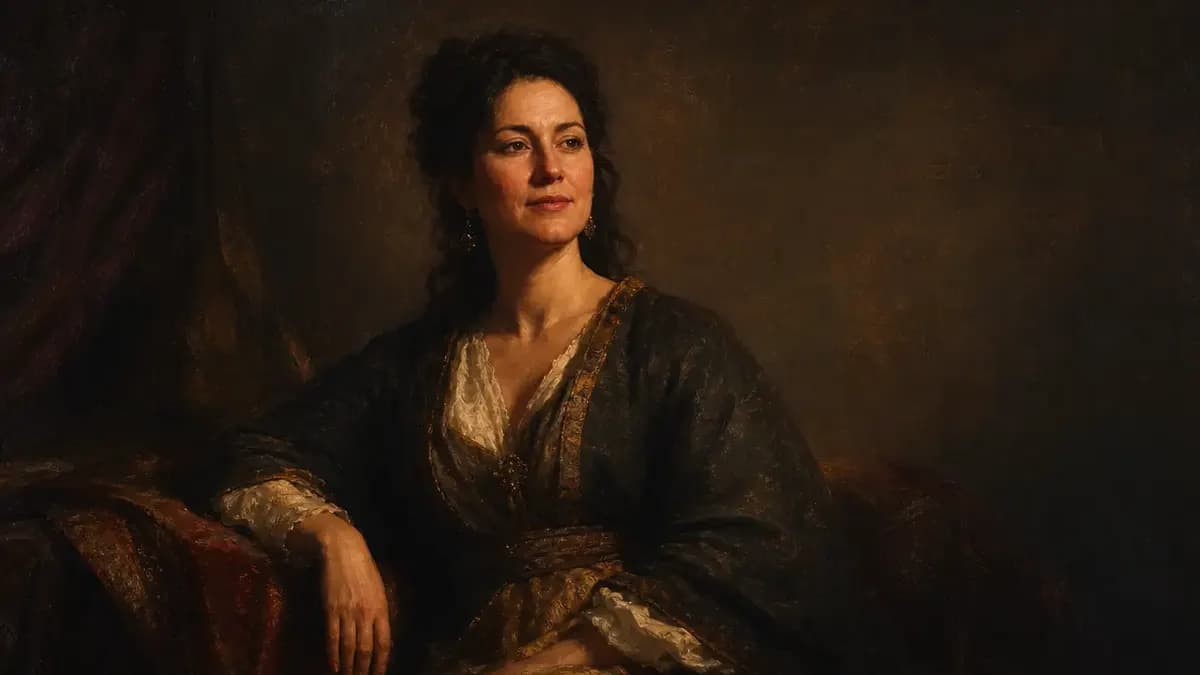
An AI classical portrait generator paints subjects in the manner of Old Master portraiture — seventeenth to eighteenth century costume, directional lighting, dark neutral grounds and a visibly painted surface. Describe the sitter, the period and the school, then generate in Ofrai Image Studio. Period accuracy depends on naming the century and the materials, because a modern collar or a wristwatch survives unless you explicitly forbid it.
New accounts include 1 free GPT Image 2.5 generation. Other models and video use credits.
Example prompts
Impasto oil strokes, layered color
Choosing the school and century for an AI classical portrait
Pick a specific tradition, because these are visually distinct: Rembrandt-style chiaroscuro with warm brown grounds and loose impasto; Vermeer-style cool window light from camera left with soft yellow-blue contrast; Reynolds-style grand manner, sweeping brushwork and dramatic drapery; Holbein-style crisp linear description with flat patterned backgrounds. Naming the artist as a style reference is acceptable and gives the model a strong anchor — then add period, costume and lighting so the result stays a painting rather than a photograph of one.
Costume and setting cues by period
Period accuracy is mostly costume detail. For 1620s–1650s: white falling lace collar, dark doublet, sash at the waist, lace cuffs. For 1680s–1720s: long curled periwig, richly coloured coat, waistcoat, lace cravat. For 1750s–1780s: powdered hair tied back, embroidered waistcoat, silk coat, lace jabot. Add the setting last: heavy curtain, stone column, dark wooden panel, or a plain olive ground with no objects competing for attention. Mixing two centuries in one prompt produces clothing that never existed, so pick one.
Lighting: chiaroscuro against northern daylight
Two lighting families cover most requests. Chiaroscuro: a single warm source from upper left, deep shadow on the right side of the face, glossy highlights on the nose, cheekbone and satin. Northern daylight: even cool window light, minimal shadow, pale sky tones, quiet interior. Mixing them produces a muddy face. State the direction explicitly — 'light from a single source upper left, falloff across the right cheek' — because models default to flat frontal lighting if left alone.
Pose, hands, and gaze
Old Master portraits work on body language. Useful cues: 'three-quarter turn to the left, head turned back to the viewer, direct gaze', 'hands resting on a table, one hand visible, fingers long and relaxed', 'head slightly lowered, eyes raised'. Hands are the hardest element — describe them as long, thin and relaxed with visible knuckles, and keep them partially in shadow. Frontal symmetrical poses read as passport photos rather than portraits, even with perfect costume.
Painted surface, craquelure, and varnish
The surface is what separates a painting from a filtered photograph, so ask for it explicitly: 'visible brush texture and impasto in the highlights, fine craquelure across the glaze, warm varnish tone, subtle canvas weave visible in the background'. Use sparingly: heavy craquelure on a face competes with the sitter, while a light craquelure plus impasto reads convincingly. For a clean museum look, request 'conserved surface, varnish even, no damage'.
Which engine holds period detail
gpt-image-2 is the strongest choice for written period descriptions, because costume specificity is a long multi-clause instruction and it follows those most literally. nano-banana-pro is for turning a real person's photo into the painting while preserving their features. flux-2 is useful for cheap composition tests with the same prompt. seedream-5 handles flatter, illustrated Old Master imitations and ornamental frames. Draft the composition on flux-2 first, then spend credits on the hero engine for the final painting.
Fixing modern artefacts
Watches, glasses, zippers, modern haircuts and smartphone-like rectangles all leak into these renders. Name them out loud as negatives: 'no wristwatch, no modern jewellery, no zip fasteners, no eyeglasses'. Also avoid describing the sitter by current fashion, because a modern blazer reference drags the whole costume forward. If a modern artefact appears, check whether the sitter's own photo included one and remove the photo reference for that generation. The same trick removes text, logos and contemporary hairstyles from the result.
Framing for gallery-style output
Portrait format suits these: 3:4 or 4:5 for a half-length bust, 2:3 for a full standing figure with drapery, 1:1 for a tight head study. Ask for an oval canvas or a gilded carved frame explicitly when you want the period object included, and add 'no watermark, no text in frame'. For a series of sitters, generate them one at a time with an identical style sentence, then match the crop by hand rather than letting each render choose its own.
Four AI classical portrait prompts with costume and light
Rembrandt school, 1640s: 'Old Master oil portrait, warm brown ground, single light source from upper left, deep shadow across the right side of the face, glossy highlights on the nose and cheekbone, sitter in a dark doublet with a white falling lace collar and lace cuffs, visible impasto in the highlights, fine craquelure, three-quarter turn with direct gaze'.
Vermeer school, 1660s: 'cool window light from camera left, soft yellow and blue contrast, sitter in a rich blue coat with a long curled periwig and lace cravat, smooth blended brushwork, pale interior wall, quiet and still'. Reynolds manner, 1770s: 'grand manner portrait, powdered hair tied back, embroidered silk waistcoat, sweeping confident brushwork, dramatic drapery falling from the left, deep olive ground'.
Holbein school, 1530s: 'crisp linear description, flat patterned background of green and gold, sitter in black with a square neckline and heavy gold chain, hands in half shadow, even frontal light'. Each one commits to a century, a school, a costume list, and a single light direction, in that order.
Canvas ratio and varnish in portrait prompts
Portrait formats match the crop you intend: 3:4 or 4:5 for a half-length bust, 2:3 for a full standing figure with drapery, 1:1 for a tight head study. Ask for the frame as a painted object when you want one — 'oval canvas in a gilded carved frame, aged gilt with craquelure' — because a modern moulding is easier to trim later than to unpaint.
Varnish tone is a single sentence that changes the whole reading: 'warm amber varnish, slightly uneven, no modern varnish gloss' for a museum feel, or 'clean conserved surface, varnish even, no damage' when the client wants it to look restored.
Credit cost of a painted portrait series
One portrait is a moderate job: eight to fifteen generations typically, because period costume is a long multi-clause instruction and the failures are specific and fixable. A series is heavier. Six portraits for one client in a single school and period usually runs forty to sixty generations, and the cost is dominated by detail acceptance rather than composition — you will reject a beautiful render because the collar is wrong, and that rejection costs a full generation.
Draft the composition on flux-2 with the same period prompt, which tests layout for a fraction of the price, then move only approved layouts to the hero engine. Group your checks: inspect the costume, the light direction and the hands in one pass at full resolution rather than approving, then discovering the hands, then re-rendering. If the client needs a matched pair, generate each sitter separately in the identical style sentence and composite, exactly as you would with caricature sets.
Classical painting versus stylised portraits and oil renders
Use this page when the period look is the point: heritage branding, museum and gallery assets, historical fiction covers, and interior design mood boards. A photo-real stylisation page is the better tool when the client wants the person, just polished — it keeps modern clothing and a modern light and does not fight you about collars. An oil painting page covers the medium without the period, which is right for a contemporary portrait executed in oils but wrong when the costume has to be 1650s.
The failure mode of choosing wrong is obvious: a period prompt run without the century detail drifts into a generic nineteenth-century studio photograph with varnish on it. If the brief says historic, Renaissance, baroque or Old Master, stay on this page and name the century. If it says painted, elegant or textured, the oil page will deliver faster at lower cost.
Framing, gilding, and finishing a painted portrait
Treat the frame as part of the design rather than a finishing detail. Specify the shape first — oval, rectangular with a carved crest, arched — and then the finish: 'gilded carved frame, aged gold leaf, warm varnish, subtle craquelure in the gesso, not shiny new gold'. Contrasting a dark carved frame with a warm olive ground reads more expensive than matching them, and it also hides the seam where canvas meets moulding.
Ask for a plain wall behind the frame with a soft shadow falling to one side, because that shadow is what makes a rendered frame look three-dimensional rather than pasted on. For a series, generate the frame once at high resolution and reuse it as a reference across every sitter, changing only the canvas content.
Finish by exporting the largest render available, and keep the uncropped version — matching the crop across a set is done by hand, and cropping later from a saved master is far safer than regenerating each canvas to fit.
FAQ
- Which old master style should I choose?
- They are visually distinct: Rembrandt for warm chiaroscuro and impasto, Vermeer for cool window light and soft interiors, Reynolds for grand drapery and sweeping brushwork, Holbein for crisp linear detail and flat patterned backgrounds. Name the artist as a style anchor and add the century so the result reads as a painting.
- How do I stop modern objects appearing?
- Name them as negatives: no wristwatch, no eyeglasses, no zip fasteners, no modern jewellery. Also avoid describing the sitter in current fashion, and check whether the reference photo contains a modern object that is leaking into the result. Naming the century in the same prompt reduces the drift as well.
- What detail should I specify for a convincing painted surface?
- Ask for visible brush texture and impasto in the highlights, fine craquelure across the glaze, a warm varnish tone, and canvas weave in the background. Keep it restrained — heavy craquelure on the face competes with the sitter instead of helping.
- Can I turn my own photo into an Old Master portrait?
- Yes. Upload the photo and use a reference-aware engine such as nano-banana-pro so facial structure survives the repainting. Describe only the costume, lighting and period, and let the reference carry the likeness. A three-quarter front source image gives the painter the most to work with.
- Why do the hands look wrong in my classical portraits?
- Hands are the hardest element in this genre. Describe them as long, thin and relaxed with visible knuckles, keep them partially in shadow, and avoid symmetrical frontal poses, which read as passport photos rather than portraits. Small, half-lit hands are much safer than fully lit open palms.
- What aspect ratio should a classical portrait use?
- 3:4 or 4:5 for a half-length bust, 2:3 for a full standing figure with drapery, and 1:1 for a tight head study. For a series of sitters, generate one at a time with an identical style sentence and match the crop manually.
Related generators
- AI Caricature Generator
- AI Oil Painting Generator
- AI Avatar Generator — Consistent Faces
- AI Black And White Photo Generator
- AI Chibi Character Generator
- AI Cozy Anime Art Generator
- AI Cozy Winter Wallpaper Generator
- AI Crayon Drawing Generator
- AI Fashion Model Generator
- AI Flight Attendant Generator
- AI Friendship Photo Generator for Two Friends
- AI Funny Photo Generator