Blog
Best AI Image Generators for Ecommerce in 2026
By Ofrai Editorial (Editorial Team)
An ecommerce image set is not one job. The white-background hero has to look photographed and stay consistent across the catalogue. The lifestyle shot has to look like a room a person was standing in. The flat lay has to get the spacing right. We cut our 1,840-still benchmark down to the three commerce lanes and ranked the five engines we tested on what a usable still costs once the rejects are counted.
How we tested the commerce lanes
Our 1,840-still image benchmark gave every model the same 46 prompts across five lanes: ecommerce hero on white, lifestyle on set, poster with body copy, character turnaround and product flat lay. Three of those five are commerce work, and they fail in different ways, which is why they are worth separating. We rendered at default settings, locked seeds where the API allowed, and scored on four axes: prompt fidelity, text accuracy, skin and fabric realism, and artifact rate. Price was normalised to USD per finished 1024×1024 still.
The downgrade rule: fewer than six usable outputs per ten generations and the model is downgraded, because an engine that needs multiple retries to deliver one usable hero shot is not the best AI image generator for any working team.
The picks for commerce
Nano Banana Pro is the photographic one. Lifestyle product shots, fashion and skin tones look more like camera captures and less like illustrations, which is the whole argument for it on a product page. Flux 2 Pro is the detail one, and the strongest of the top three at rendering small props and textures — jewellery, fabric weave, glass — and the one to reach for when the product itself carries detail a shopper will zoom in on.
GPT Image 2 is the layout one, and it is the only contender in this test to trust for product-with-text, where the label or the price has to be legible. Seedream 5 is the cheapest iteration partner, which makes it the engine you draft a whole catalogue in before you render the hero. And for volume, Nano Banana is the budget still at roughly 8 credits, useful when the set is large and the frames are not the point.
What a usable commerce still costs
At default 1K settings, in Ofrai credits: Nano Banana at roughly 8 per still, GPT Image 2 around 10, GPT Image 2.5 around 15, Flux 2 Pro around 17, Seedream 5 around 21, and Nano Banana Pro around 33. For a four-colour lifestyle set, plan on 5 to 6 credits per usable hero image plus rejects. A six-asset ecommerce hero set typically runs 40 to 70 credits once rejects are counted.
At retail, plan on roughly 0.05 to 0.10 USD per finished hero still, and closer to 0.15 USD for editorial once you include the rejects. There is no honest free tier that ships a full-resolution still without a watermark — lab free tiers are limited to lower resolution or rate-capped to a handful per day.
Which engine for which shot
White background and consistent across the catalogue: Nano Banana Pro, because the thing that breaks is the product shifting between frames and a photograph has to hold still. Product with visible detail, jewellery, glass, fabric: Flux 2 Pro, which was the strongest of the top three at small props and textures. Any frame where a price, a label or a line of copy has to read: GPT Image 2, because it was the only model in the test that handled long, accurate poster type without manual correction.
Bulk catalogues where most frames are never seen twice: Nano Banana at roughly 8 credits, with the hero frames re-rendered on a better engine. And if your set includes a person, put the photographic engine on the person — that is where synthetic skin gives itself away first, and it is cheaper to re-render two frames than to reshoot a set.
Running the comparison inside Ofrai
Open Image Studio and select a model that accepts your product reference. Use the same brief and comparable settings on each candidate. Check the credit estimate before generating, then compare product shape, label legibility and crop with the original.
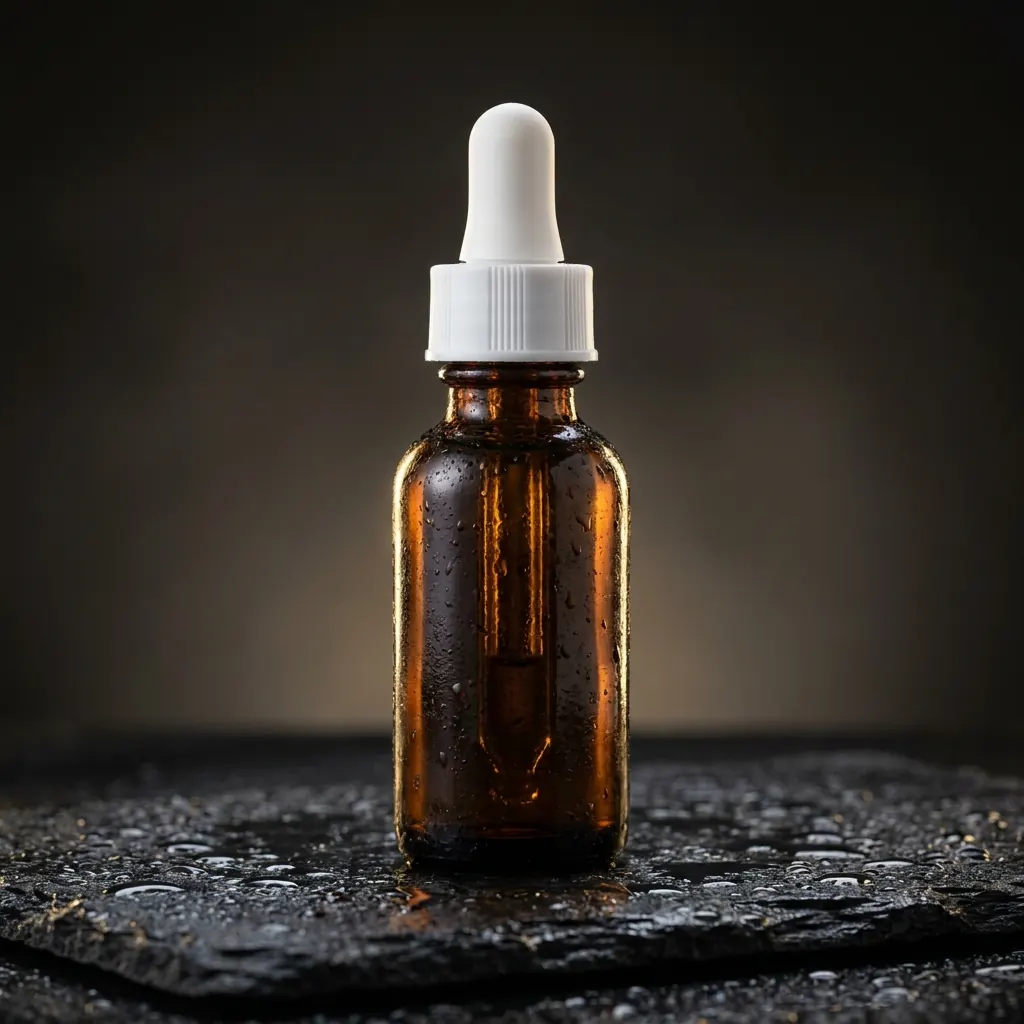
Two skincare images from the same written brief
Ofrai test · 2026-10-25 · 1K · 1:1 · one image per model from the same text prompt.
Studio product photo of an amber glass serum bottle with a white dropper cap on a wet black stone, soft rim light from behind, water droplets, shallow depth of field, commercial skincare advertising.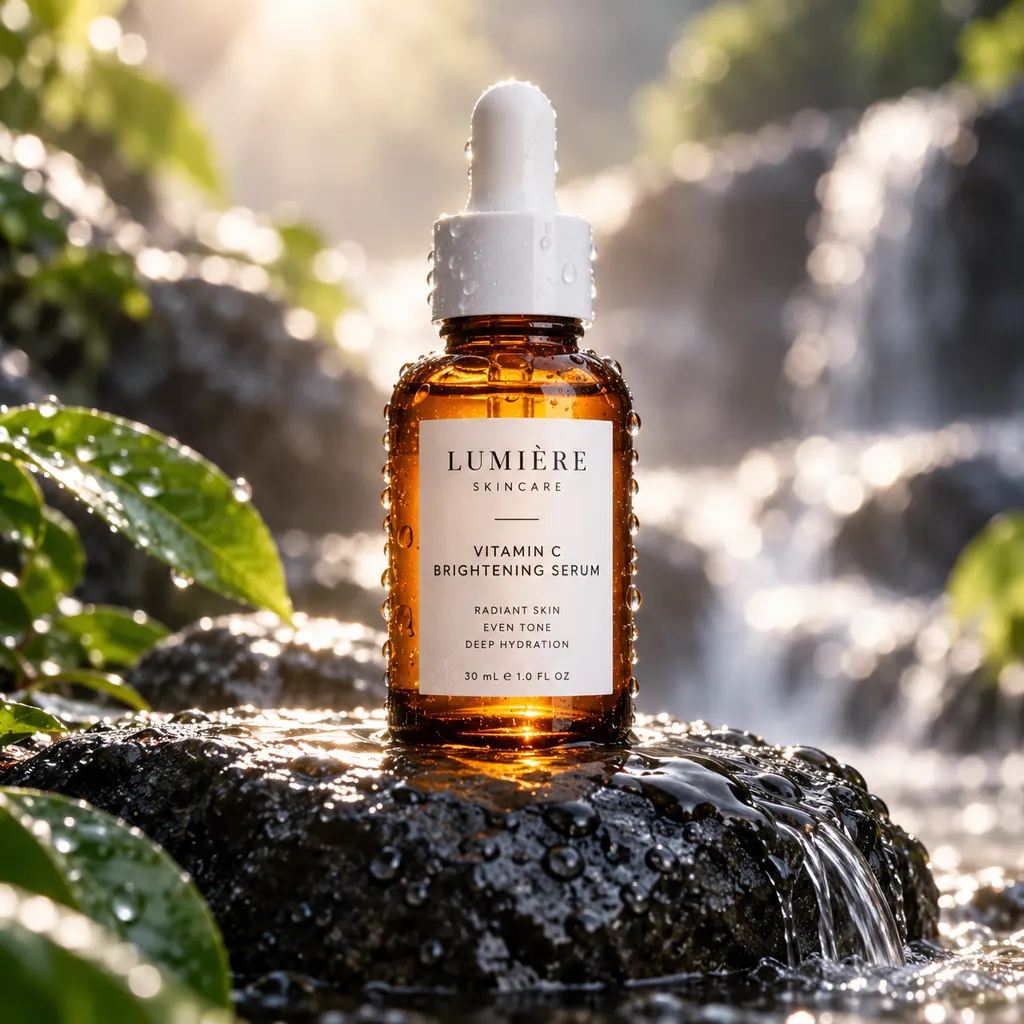
FAQ
- Which AI image generator is best for ecommerce in 2026?
- Nano Banana Pro for photoreal product on white and for lifestyle scenes, at roughly 33 credits per 1024×1024 still. Flux 2 Pro for product-with-text and for detail such as jewellery. For a four-colour lifestyle set, plan on 5 to 6 credits per usable hero plus rejects.
- How much does an ecommerce hero shot cost?
- On Ofrai, 4 to 33 credits per finished 1024×1024 still depending on the model. A six-asset hero set typically runs 40 to 70 credits once rejects are counted, and at retail that is roughly 0.05 to 0.10 USD per finished hero still.
- Which AI image generator is best for product photos with text on the label?
- GPT Image 2. It was the only model in our test that handled long, accurate type without manual correction, so it is the one to trust when the wording on the product has to read cleanly. Flux 2 Pro is the alternative if the label is short.
- What is the cheapest way to generate a large product catalogue?
- Nano Banana at roughly 8 credits per still. It is the budget engine in this group and is fine for frames nobody will look at twice, as long as you re-render the hero shots on a photographic engine.
- Do I need a different AI image model for each shot type?
- Often yes, and that is the point of running them in one workspace. A photographic engine for white-background heroes, a detail engine for jewellery and glass, a layout engine for any frame with wording, and a cheap tier for volume — one subscription covers all four.